


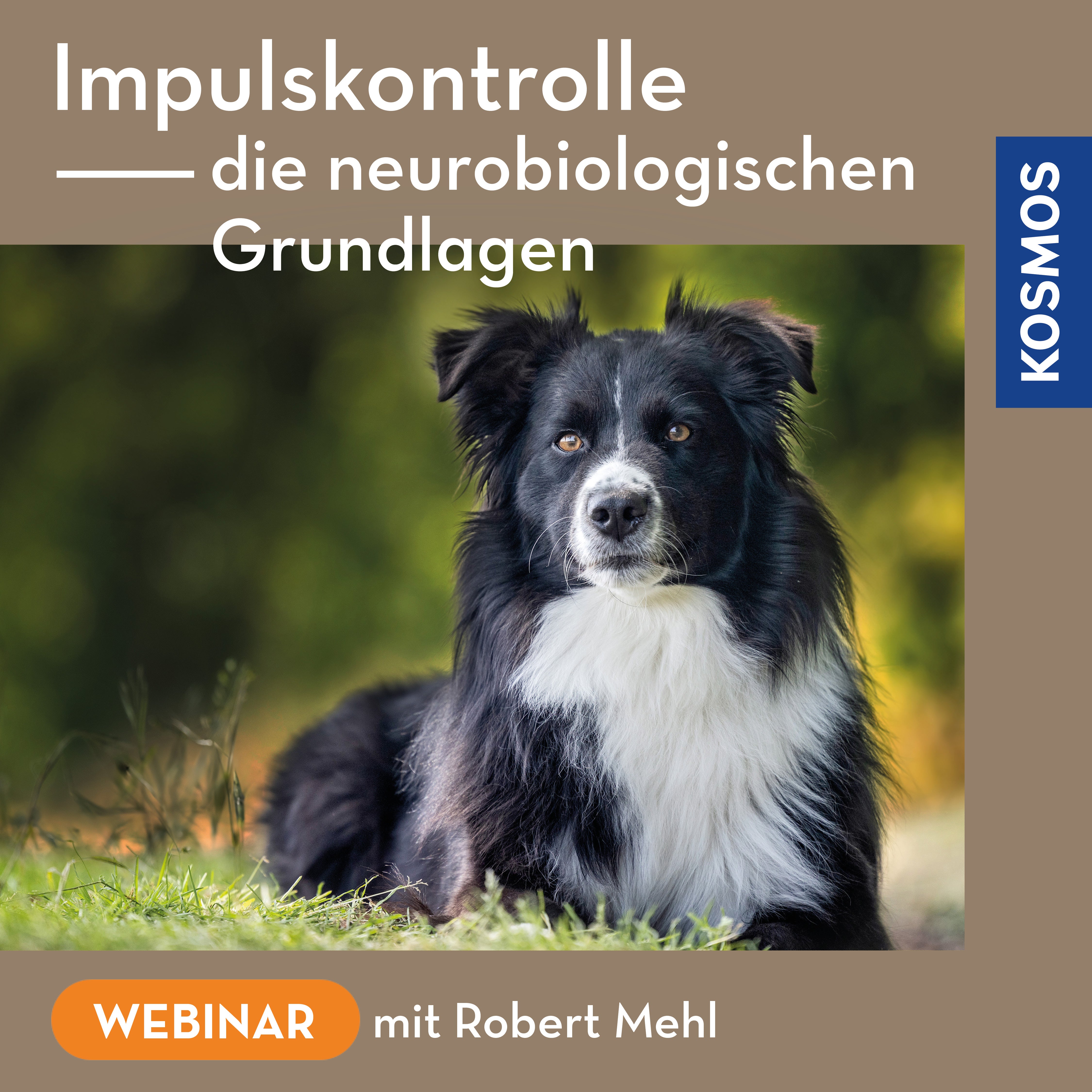

Impulse Control – The Neurobiological Foundations
Gain a more complete picture of impulse control in dogs through insights from neurobiology
What happens in the brain during impulse control and how can we promote effective impulse control in our dogs?
Access to the webinar recording
Accreditation as further training, details see product description
After completion, the certificate of attendance will be automatically stored in the customer account.
Available immediately
Dogs that are unpredictable to their owners often remain on a leash or can hardly be left unsupervised during walks or at home. Often, owners and dog trainers have already tried many things together that normally work – with other dogs. Then, at some point, deep frustration and a feeling of being overwhelmed set in on both sides. Did the owner do something wrong? Did the dog trainer overlook something?
Often, problems with impulse control are behind unpredictable behavior. Many symptoms can develop: aggressive behavior, uncontrolled flight, barely controllable hunting behavior, addictive behavior, hyperactivity, and concentration problems are just a few examples. How did it get this far and what can still be done? In this webinar, we seek answers with the help of neuroscientific findings.
Based on the human psychological perspective on treating impulse control problems, we look for transferable approaches to dealing with unpredictable dogs and for prevention options.
The aim of the webinar is for participants to develop their own ideas for dealing with unpredictable dogs and to critically evaluate existing approaches based on this knowledge.
The webinar is aimed at dog trainers and dog owners who are interested in the neurobiological causes and correlations in the development of impulse control problems. The focus is on conveying theoretical knowledge, which will be illustrated with examples. Specific cases of participants unfortunately cannot be analyzed in this context.
Learn in this webinar:
• how an impulse to act arises in the brain and how it becomes an action,
• where the motivation to behave in a certain way comes from,
• how mammals control their impulses,
• why this works better in some dogs and seemingly not at all in others,
• what influence the developmental conditions and learning environment in which the dog grows up have,
• what influence the owner's upbringing has, and
• what psychological and neuropsychological disorders negatively affect impulse control.
Our Expert:
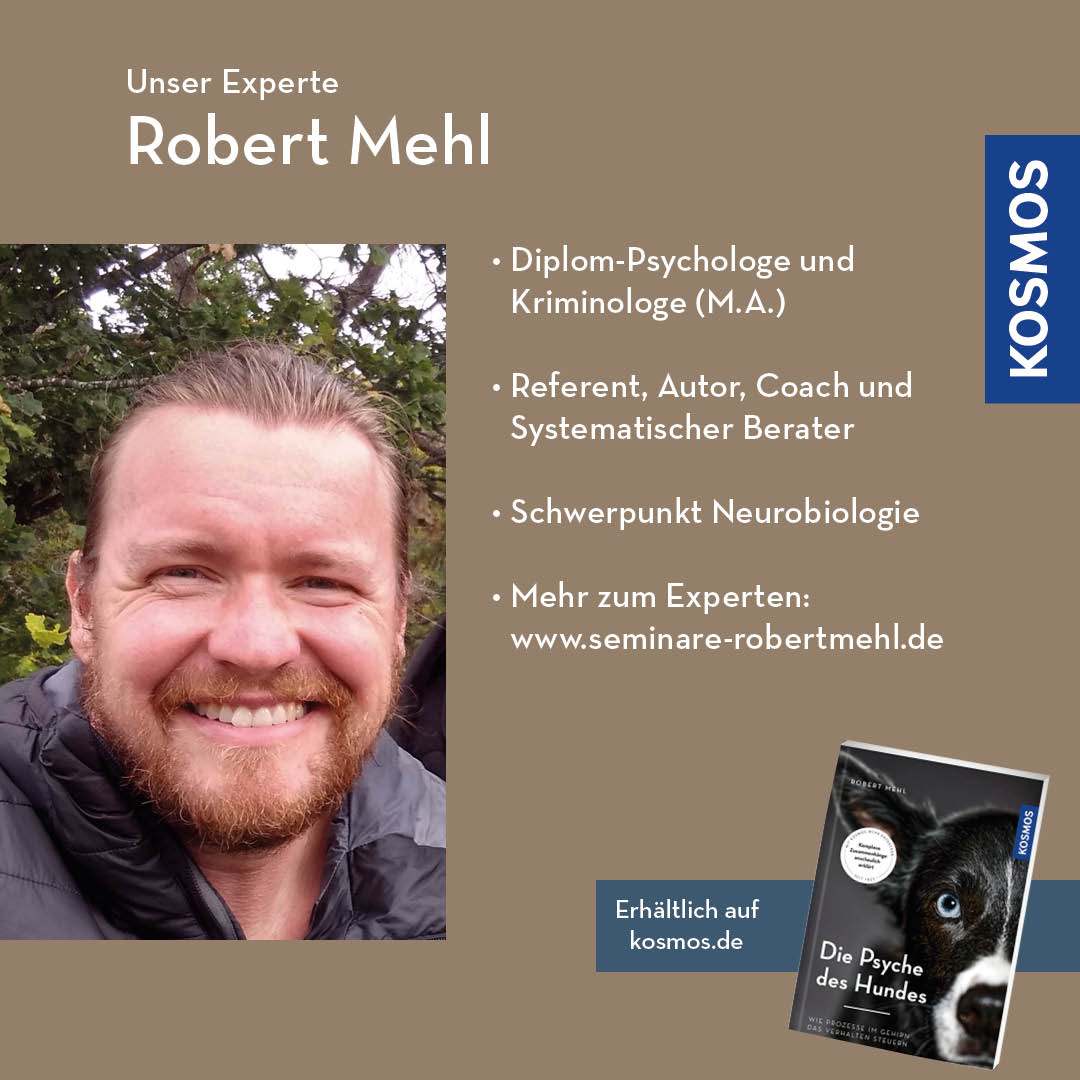
Robert Mehl is a graduate psychologist and criminologist (M.A.) with additional therapeutic training as a "Systemic Consultant and Family Therapist" (DGSF) and for "Professional Use of Dogs in Therapy" (dogument). Since 2016, he has been working as a freelance speaker, systemic consultant, and coach. He is also currently in further training to become a psychological psychotherapist (specializing in behavioral therapy). He is the author of the book "The Dog's Psyche" (KOSMOS-Verlag).
More about the expert: http://www.seminare-robertmehl.de/
Accreditation as further training: The webinar has been submitted for accreditation as further training to the Veterinary Chambers of Schleswig-Holstein and Lower Saxony. https://www.kosmos.de/teilnahmebestaetigung
Photo credit: Anna Auerbach/ Kosmos
Art Nr.
100-112-900412-video
AutorInnen / IllustratorInnen
Produktart
Webinar
Erscheinungstag
27.06.2024
Downloads
Downloads

Ratings and Reviews
Legal Guarantee
All goods purchased in this shop automatically come with a minimum two-year legal guarantee – at no extra cost.


