
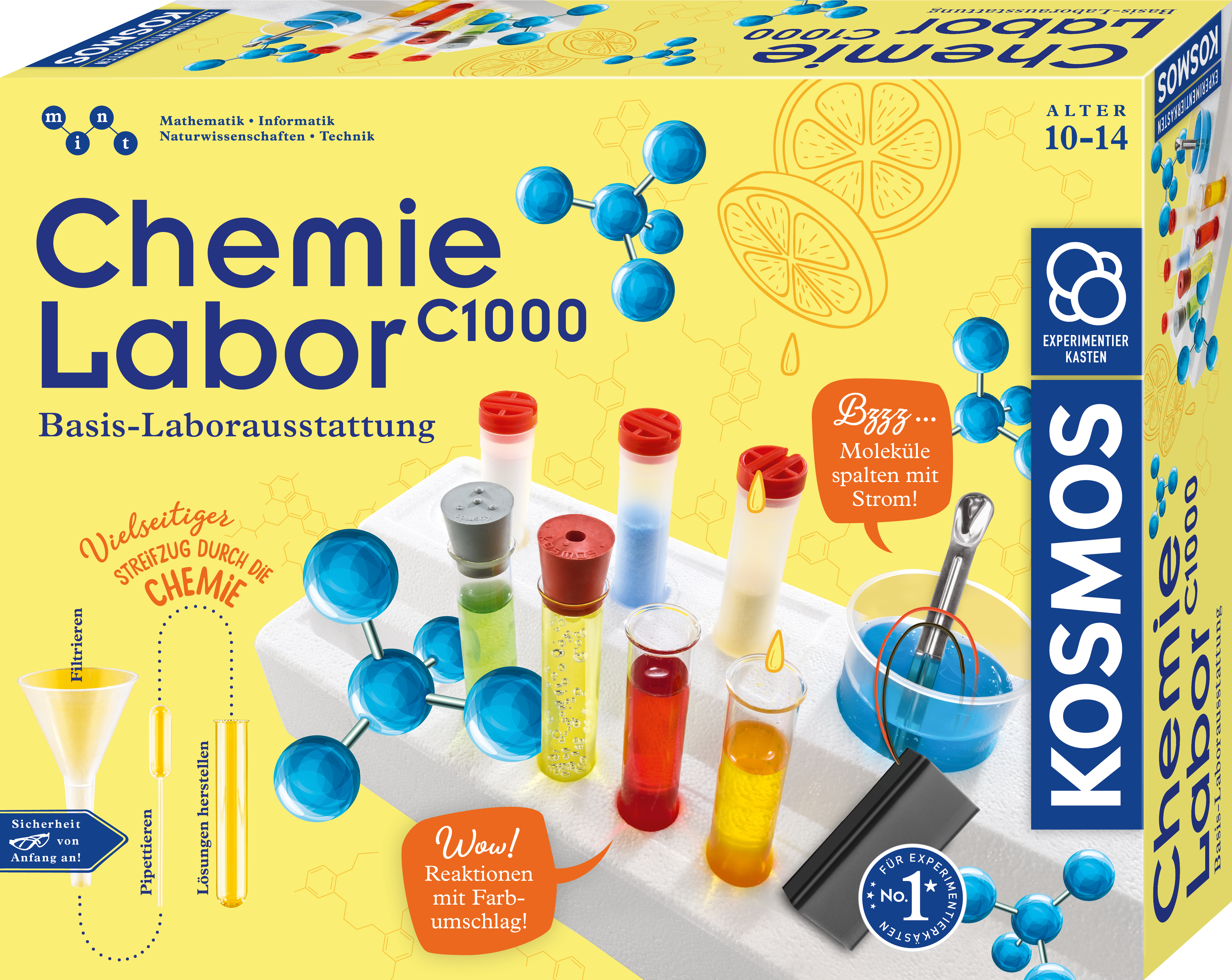


Chemistry Lab C1000
10-14
Ordered today, 04/08/2026, from you.
With the KOSMOS Chemistry Lab C1000, curious children discover the world of substances: Do you want to know... how to detect chemical substances? ... how to paint chemical pictures? ... which gas fizzes in mineral water? Young explorers observe the chemical properties of familiar substances in 125 vivid experiments: whether it's a color change due to vinegar or separation methods for felt-tip pen colors. Chemistry is not only full of surprises, it's also everywhere in our daily lives! The colorful, richly illustrated instruction manual introduces children to chemical work practices in a child-friendly way: from experiments with chemicals, solutions, and self-produced gases to first chemical reactions or substance detection, there is much to observe. This way, chemical knowledge is imparted through independent experimenting, and an enjoyment of chemistry is awakened.
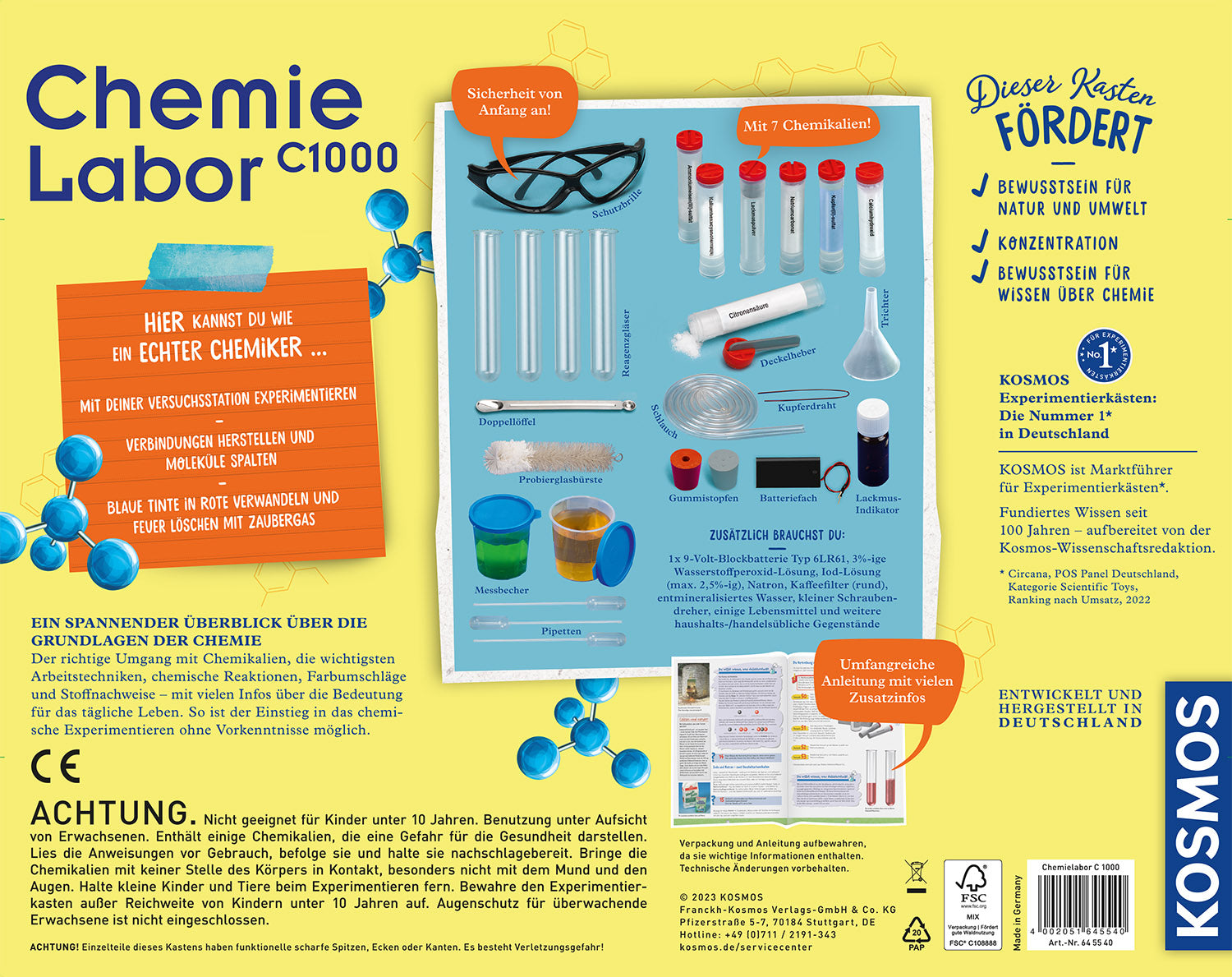
Contents: 7 Chemicals: 12g sodium carbonate, 4g potassium hexacyanoferrate(II), 8.5g calcium hydroxide, 5g ammonium iron(III) sulfate, 8g copper(II) sulfate, 10g citric acid, 1g litmus powder, 3 droppers, battery compartment, litmus vial, copper wire, 2 measuring cups with lids, 4 heat-resistant test tubes, test tube brush, various rubber stoppers, funnel, lid opener, double spoon, angled tube, experiment station, colorful poster with lab rules, safety goggles, and colorful illustrated instruction manual
Additional materials required: 1 x 9-volt block battery type 6LR61, 3% hydrogen peroxide solution, iodine solution (max. 2.5%, pharmacy), baking soda, coffee filters (round), demineralized water, some food items, and other household/commercial materials.
NOTES:
List of GHS pictogram number(s), the associated warning word, as well as hazard statements (H-phrases) and precautionary statements (P-phrases) for each hazardous substance (chemical) contained. See also associated illustrations.
Ammonium iron(III) sulfate. GHS05 DANGER
H-phrase: Causes serious eye damage.
P-phrases: Wear eye protection. – IF IN EYES: Rinse cautiously with water for several minutes. Remove contact lenses, if present and easy to do. Continue rinsing. Immediately call a POISON CENTER or doctor. If medical advice is needed, have product container or label at hand.
EC No. 233-382-4, 5 g (0.18 oz.)
Hazard class: Serious eye damage, Category: 1
Calcium hydroxide. GHS05, GHS07 DANGER
H-phrases: Causes serious eye damage. – Causes skin irritation. – May cause respiratory irritation.
P-phrases: Avoid breathing dust. – Wear protective gloves and eye protection. – IF ON SKIN: Wash with plenty of water. – IF INHALED: Remove person to fresh air and keep comfortable for breathing. – IF IN EYES: Rinse cautiously with water for several minutes. Remove contact lenses, if present and easy to do. Continue rinsing. Immediately call a POISON CENTER or doctor. If medical advice is needed, have product container or label at hand. – Wash hands thoroughly after handling. Dispose of contents/container (of chemicals no longer needed)
to hazardous waste disposal.
EC No. 215-137-3, 8.5 g (0.30 oz)
The notes also apply to the aqueous solution lime water (for preparation, see experiment 10).
Hazard classes: Serious eye damage, Category: 1, Skin irritation, Category: 2, Specific target organ toxicity, Category: 3
Citric acid. GHS07 WARNING
H-phrase: Causes serious eye irritation. May cause respiratory irritation.
P-phrases: Wear eye protection. – IF IN EYES: Rinse cautiously with water for several minutes. Remove contact lenses, if present and easy to do. Continue rinsing. If eye irritation persists: Get medical advice/attention. If medical advice is needed, have product container or label at hand. – Wash hands thoroughly after handling. Avoid breathing dust. Call a doctor if you feel unwell. Dispose of contents/container (of chemicals no longer needed) to hazardous waste disposal.
EC No. 611-842-9, 10 g (0.35 oz.)
Hazard class: Serious eye irritation, Category: 2
Potassium hexacyanoferrate(II).
H-phrase: Harmful to aquatic life with long-lasting effects.
P-phrase: Avoid release to the environment. Dispose of contents/container (of chemicals no longer needed) to hazardous waste disposal. – Contact with acid liberates very toxic gases.
EC No. 237-722-2, 4 g (0.14 oz.)
Hazard class: Hazardous to the aquatic environment (chronic aquatic toxicity), Category: 3
Copper sulfate. GHS05, GHS07, GHS09 DANGER
H-phrases: Harmful if swallowed. – Causes serious eye damage. – Very toxic to aquatic life with long-lasting effects.
P-phrases: IF ON SKIN: Wear eye protection. – IF SWALLOWED: Call a POISON CENTER/doctor if you feel unwell. – IF IN EYES: Rinse cautiously with water for several minutes. Remove contact lenses, if present and easy to do. Continue rinsing. Immediately call a POISON CENTER or doctor. If medical advice is needed, have product container or label at hand. – Wash hands thoroughly after handling. – Avoid release to the environment. Dispose of contents/container (of chemicals no longer needed) to hazardous waste disposal.
EC No. 231-847-6, 8 g (0.28 oz.)
Hazard classes: Acute toxicity (oral), Category: 4, Serious eye damage, Category: 1, Hazardous to the aquatic environment (acute aquatic toxicity / chronic aquatic toxicity), Category: 1
Sodium carbonate. GHS07 WARNING
H-phrase: Causes serious eye irritation.
P-phrases: Wear eye protection. – IF IN EYES: Rinse cautiously with water for several minutes. Remove contact lenses, if present and easy to do. Continue rinsing. If
eye irritation persists: Get medical advice/attention. If medical advice is needed, have product container or label at hand. – Wash hands thoroughly after handling.
EC No. 207-838-8, 12 g (0.42 oz.) Index No. 011-005-00-2
Hazard class: Serious eye irritation, Category: 2
Litmus powder – not classified
WARNING! For all chemicals: Keep locked up. Keep out of reach of children (except for the experimenting child instructed by an adult).
Always follow the information on the product label.
Observe the required protective clothing “Workplace and Equipment” in the experiment instructions.
For environmental protection reasons: Dispose of contents/container (of chemicals no longer needed) to hazardous waste disposal.
Manufacturer / Responsible Person:
Franckh-Kosmos Verlags-GmbH & Co. KG, Pfizerstrasse 5-7, 70184, Stuttgart, Germany, kosmos.de/servicecenter
Contents: 7 Chemicals: 12g sodium carbonate, 4g potassium hexacyanoferrate(II), 8.5g calcium hydroxide, 5g ammonium iron(III) sulfate, 8g copper(II) sulfate, 10g citric acid, 1g litmus powder, 3 droppers, battery compartment, litmus vial, copper wire, 2 measuring cups with lids, 4 heat-resistant test tubes, test tube brush, various rubber stoppers, funnel, lid opener, double spoon, angled tube, experiment station, colorful poster with lab rules, safety goggles, and colorful illustrated instruction manual
Additional materials required: 1 x 9-volt block battery type 6LR61, 3% hydrogen peroxide solution, iodine solution (max. 2.5%, pharmacy), baking soda, coffee filters (round), demineralized water, some food items, and other household/commercial materials.
NOTES:
List of GHS pictogram number(s), the associated warning word, as well as hazard statements (H-phrases) and precautionary statements (P-phrases) for each hazardous substance (chemical) contained. See also associated illustrations.
Ammonium iron(III) sulfate. GHS05 DANGER
H-phrase: Causes serious eye damage.
P-phrases: Wear eye protection. – IF IN EYES: Rinse cautiously with water for several minutes. Remove contact lenses, if present and easy to do. Continue rinsing. Immediately call a POISON CENTER or doctor. If medical advice is needed, have product container or label at hand.
EC No. 233-382-4, 5 g (0.18 oz.)
Hazard class: Serious eye damage, Category: 1
Calcium hydroxide. GHS05, GHS07 DANGER
H-phrases: Causes serious eye damage. – Causes skin irritation. – May cause respiratory irritation.
P-phrases: Avoid breathing dust. – Wear protective gloves and eye protection. – IF ON SKIN: Wash with plenty of water. – IF INHALED: Remove person to fresh air and keep comfortable for breathing. – IF IN EYES: Rinse cautiously with water for several minutes. Remove contact lenses, if present and easy to do. Continue rinsing. Immediately call a POISON CENTER or doctor. If medical advice is needed, have product container or label at hand. – Wash hands thoroughly after handling. Dispose of contents/container (of chemicals no longer needed)
to hazardous waste disposal.
EC No. 215-137-3, 8.5 g (0.30 oz)
The notes also apply to the aqueous solution lime water (for preparation, see experiment 10).
Hazard classes: Serious eye damage, Category: 1, Skin irritation, Category: 2, Specific target organ toxicity, Category: 3
Citric acid. GHS07 WARNING
H-phrase: Causes serious eye irritation. May cause respiratory irritation.
P-phrases: Wear eye protection. – IF IN EYES: Rinse cautiously with water for several minutes. Remove contact lenses, if present and easy to do. Continue rinsing. If eye irritation persists: Get medical advice/attention. If medical advice is needed, have product container or label at hand. – Wash hands thoroughly after handling. Avoid breathing dust. Call a doctor if you feel unwell. Dispose of contents/container (of chemicals no longer needed) to hazardous waste disposal.
EC No. 611-842-9, 10 g (0.35 oz.)
Hazard class: Serious eye irritation, Category: 2
Potassium hexacyanoferrate(II).
H-phrase: Harmful to aquatic life with long-lasting effects.
P-phrase: Avoid release to the environment. Dispose of contents/container (of chemicals no longer needed) to hazardous waste disposal. – Contact with acid liberates very toxic gases.
EC No. 237-722-2, 4 g (0.14 oz.)
Hazard class: Hazardous to the aquatic environment (chronic aquatic toxicity), Category: 3
Copper sulfate. GHS05, GHS07, GHS09 DANGER
H-phrases: Harmful if swallowed. – Causes serious eye damage. – Very toxic to aquatic life with long-lasting effects.
P-phrases: IF ON SKIN: Wear eye protection. – IF SWALLOWED: Call a POISON CENTER/doctor if you feel unwell. – IF IN EYES: Rinse cautiously with water for several minutes. Remove contact lenses, if present and easy to do. Continue rinsing. Immediately call a POISON CENTER or doctor. If medical advice is needed, have product container or label at hand. – Wash hands thoroughly after handling. – Avoid release to the environment. Dispose of contents/container (of chemicals no longer needed) to hazardous waste disposal.
EC No. 231-847-6, 8 g (0.28 oz.)
Hazard classes: Acute toxicity (oral), Category: 4, Serious eye damage, Category: 1, Hazardous to the aquatic environment (acute aquatic toxicity / chronic aquatic toxicity), Category: 1
Sodium carbonate. GHS07 WARNING
H-phrase: Causes serious eye irritation.
P-phrases: Wear eye protection. – IF IN EYES: Rinse cautiously with water for several minutes. Remove contact lenses, if present and easy to do. Continue rinsing. If
eye irritation persists: Get medical advice/attention. If medical advice is needed, have product container or label at hand. – Wash hands thoroughly after handling.
EC No. 207-838-8, 12 g (0.42 oz.) Index No. 011-005-00-2
Hazard class: Serious eye irritation, Category: 2
Litmus powder – not classified
WARNING! For all chemicals: Keep locked up. Keep out of reach of children (except for the experimenting child instructed by an adult).
Always follow the information on the product label.
Observe the required protective clothing “Workplace and Equipment” in the experiment instructions.
For environmental protection reasons: Dispose of contents/container (of chemicals no longer needed) to hazardous waste disposal.
Manufacturer / Responsible Person:
Franckh-Kosmos Verlags-GmbH & Co. KG, Pfizerstrasse 5-7, 70184, Stuttgart, Germany, kosmos.de/servicecenter
Alter
10-14
Abmessung (LxBxH)
370 mm x 292 mm x 80 mm
EAN / ISBN
4002051645540
Art Nr.
64554
AutorInnen / IllustratorInnen
Produktart
Experiment kit
Erscheinungstag
07.10.2021
Downloads
Downloads

WARNING. Not suitable for children under 10 years. For use under adult supervision. Contains some chemicals which present a hazard to health. Read the instructions before use, follow them and keep them for reference. Do not allow chemicals to come into contact with any part of the body, especially the mouth and eyes. Keep small children and animals away when experimenting. Keep the experiment kit out of reach of children under 10 years of age. Eye protection for supervising adults is not included.
Chemistry Lab C1000
Sale price49,99 €
Ratings and Reviews


